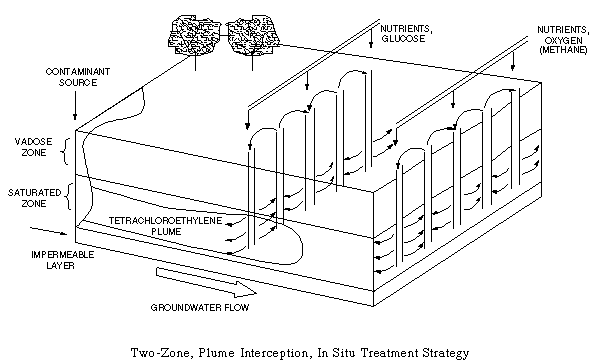
The two-zone, plume interception, in situ treatment strategy is designed to treat chlorinated and nonchlorinated organic compounds in saturated soils and groundwater using a sequence of anaerobic and aerobic conditions (see figure below). The in situ anaerobic and aerobic system constitutes a treatment train that biodegrades a wide assortment of chlorinated and nonchlorinated compounds.
When applying this technology, anaerobic and aerobic conditions are produced in two distinct, hydraulically controlled, saturated soil zones. Groundwater passes through each zone as it is recirculated through the treatment area. The first zone, the anaerobic zone, is designed to partially dechlorinate highly chlorinated solvents such as tetrachloroethene (PCE), trichloroethene (TCE), and 1,1,1-trichloroethane with natural biological processes. The second zone, the aerobic zone, is designed to biologically oxidize the partially dechlorinated products from the first zone, as well as other compounds that were not susceptible to the anaerobic treatment phase.
Anaerobic conditions are produced or enhanced in the first treatment zone by introducing a primary carbon source, such as glucose or acetate, and mineral nutrients, such as nitrogen and phosphorus. When proper anaerobic conditions are attained, the target contaminants are reduced. For example, PCE is dechlorinated to TCE, and TCE is dechlorinated to dichloroethene (DCE) and vinyl chloride. Under favorable conditions, this process can completely dechlorinate the organics to ethene and ethane.
Aerobic conditions are produced or enhanced in the second treatment zone by introducing oxygen, mineral nutrients such as nitrogen and phosphorus, and possibly an additional carbon source, such as methane (if an insufficient supply of methane results from the upstream, anaerobic zone). When proper aerobic conditions are attained in this zone, partially dechlorinated products and other target compounds from the first zone are oxidized. For example, less-chlorinated ethenes such as DCE and vinyl chloride are cometabolized during the aerobic microbiological degradation of methane.
The treatment strategy is designed to biologically remediate subsoils by enhancing indigenous microorganism activity. If indigenous bacterial populations do not provide the adequate anaerobic or aerobic results, specially adapted cultures can be introduced to the aquifer. These cultures are introduced using media-filled trenches that can support added microbial growth.
The two-zone, plume interception, in situ treatment strategy is designed to treat groundwater and saturated soils containing chlorinated and nonchlorinated organic compounds.
The two-zone, plume interception, in situ treatment strategy was accepted into the SITE Emerging Technology Program in July 1989. Optimal treatment parameters for field testing were investigated in bench-scale soil aquifer simulators. The objectives of bench-scale testing were to (1) determine factors affecting the development of each zone, (2) evaluate indigenous bacterial communities, (3) demonstrate treatment of chlorinated and nonchlorinated solvent mixtures, and (4) develop a model for the field remediation design. The Emerging Technology Bulletin (EPA/540/F-95/510), which details the bench-scale testing results, is available from EPA.
A pilot-scale field demonstration system was installed at an industrial facility in Massachusetts. Pilot testing began in September 1996.
EPA PROJECT MANAGER:
Ronald Lewis
U.S. EPA
National Risk Management Research Laboratory
26 West Martin Luther King Drive
Cincinnati, OH 45268
513-569-7856
Fax: 513-569-7105
TECHNOLOGY DEVELOPER CONTACT:
Jaret Johnson or Willard Murray
ABB Environmental Services, Inc.
Corporate Place 128
107 Audubon Road
Wakefield, MA 01880
617-245-6606
Fax: 617-246-5060
E-mail:
JARET.C.JOHNSON@USEVS.Mail.Abb.Com