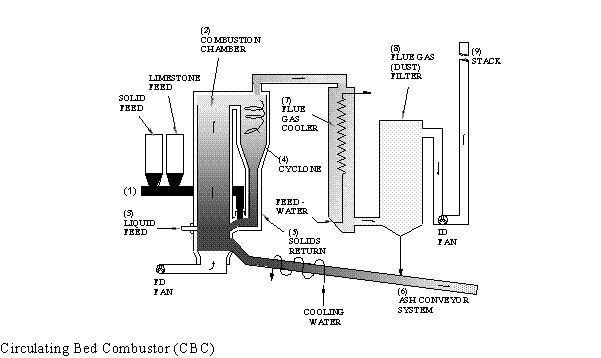
General Atomics' circulating bed combustor (CBC) uses high velocity air to entrain circulating solids and create a highly turbulent combustion zone that destroys toxic hydrocarbons. The commercial-scale, 3-foot combustion chamber can treat up to 150 tons of contaminated soil daily, depending on the heating value of the feed material.
The CBC operates at lower temperatures than conventional incinerators (1,450 to 1,600 °F). The CBC's high turbulence produces a uniform temperature around the combustion chamber and hot cyclone. The CBC also completely mixes the waste material during combustion. Effective mixing and low combustion temperature reduce operating costs and potential emissions of such gases as nitrogen oxide (NOx) and carbon monoxide (CO). Natural gas, fuel oil, or diesel can be used as auxiliary fuel. No auxiliary fuel is needed for waste streams with a net heating value greater than 2,900 British thermal units per pound.
As shown in the figure below, waste material and limestone are fed into the combustion chamber along with the recirculating bed material. The limestone neutralizes acid gases. A conveyor transports the treated ash out of the system for proper disposal. Hot combustion gases pass through a convective gas cooler and baghouse before they are released to the atmosphere.
The CBC process can treat liquids, slurries, solids, and sludges contaminated with corrosives, cyanides, dioxins and furans, inorganics, metals, organics, oxidizers, pesticides, polychlorinated biphenyls (PCB), phenols, and volatile organic compounds. The CBC is permitted under the Toxic Substances Control Act to burn PCBs in all 10 EPA regions, having demonstrated a 99.99 percent destruction removal efficiency (DRE).
Applications of the CBC include a variety of industrial wastes and contaminated site materials. Waste feed for the CBC must be sized to less than 1 inch. Metals in the waste do not inhibit performance and become less leachable after incineration. Treated residual ash can be replaced on site or stabilized for landfill disposal if metals exceed regulatory limits.
The CBC (formerly owned by Ogden Environmental Services) was accepted into the SITE Demonstration Program in 1986. A treatability study on wastes from the McColl Superfund site in California was conducted under the guidance of the SITE Program, EPA Region 9, and the California Department of Health Services in March 1989. A pilot-scale demonstration was conducted at the General Atomics research facility in San Diego, California using a 16-inch-diameter CBC. The demonstration was conducted on soil from the McColl Superfund Site in Fullerton, California.
Several 3-foot-diameter CBCs have been built and successfully operated. At the Swanson River project in Alaska, over 100,000 tons of PCB-contaminated soil was successfully treated to limits of detection that were far below allowable limits. The process took just over 3 years, from mobilization of the transportable unit to demobilization. The unit operated at over 85 percent availability all year, including winter, when temperatures were below -50 °F. The soil was delisted and returned to the original site. The unit has subsequently been moved to a Canadian site.
Another unit of similar size treated soils contaminated with #6 fuel oil. Over 14,000 tons of soil was successfully treated and delisted. Upon completion, the site was upgraded to permit operation as a merchant facility treating a wide range of materials from leaking underground fuel tanks at other sites. Two other units of the same size have been constructed in Germany for treatment of munitions wastes consisting of slurried explosives and propellant. These units have been operational since early 1995 and have been permitted under stringent German regulations.
During the SITE demonstration, the CBC performed as follows:
EPA PROJECT MANAGER:
Douglas Grosse
U.S. EPA
National Risk Management Research Laboratory
26 West Martin Luther King Drive
Cincinnati, OH 45268
513-569-7844
Fax: 513-569-7585
TECHNOLOGY DEVELOPER CONTACT:
Jeffrey Broido
General Atomics
P.O. Box 85608
3550 General Atomics Court
San Diego, CA 92186-9784
619-455-4495
Fax: 619-455-4111