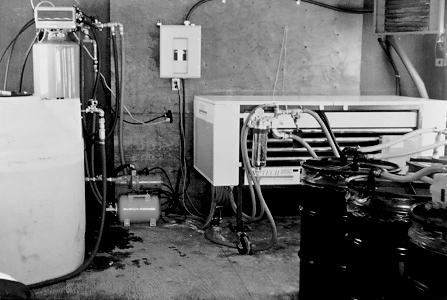
The Matrix Photocatalytic Inc. (Matrix), photocatalytic oxidation system, shown in the photograph below, removes dissolved organic contaminants from water and destroys them in a continuous flow process at ambient temperatures. When excited by light, the titanium dioxide (TiO2) semiconductor catalyst generates hydroxyl radicals that oxidatively break the carbon bonds of hazardous organic compounds.
10 Gallon-Per-Minute TiO2 Photocatalytic System Treating BTEX in Water
The Matrix system converts organics such as polychlorinated biphenyls (PCB); phenols; benzene, toluene, ethylbenzene, and xylene (BTEX); and others to carbon dioxide, halides, and water. Typically, efficient destruction occurs between 30 seconds and 2 minutes actual exposure time. Total organic carbon removal takes longer, depending on the other organic molecules and their molecular weights.
The Matrix system was initially designed to destroy organic pollutants or to remove total organic carbon in drinking water, groundwater, and plant process water. The Matrix system also destroys organic pollutants such as PCBs, polychlorinated dibenzodioxins, polychlorinated dibenzofurans, chlorinated alkenes, chlorinated phenols, chlorinated benzenes, alcohols, ketones, aldehydes, and amines. Inorganic pollutants such as cyanide, sulphite, and nitrite ions can be oxidized to cyanate ion, sulphate ion, and nitrate ion, respectively.
The Matrix system can treat a wide range of concentrations of organic pollutants in industrial wastewater and can be applied to the ultrapure water industry and the drinking water industry. The Matrix system can also remediate groundwater.
The system was accepted into the SITE Emerging Technology Program (ETP) in May 1991. Results from the ETP evaluation were published in a journal article (EPA/540/F-94/503) available from EPA. Based on results from the ETP, Matrix was invited to participate in the Demonstration Program.
During August and September 1995, the Matrix system was demonstrated at the Department of Energy's Oak Ridge Reservation in Oak Ridge, Tennessee at the K-25 site. Reports detailing the results from the demonstration will be available in 1997.
Results from the demonstration are detailed below:
EPA PROJECT MANAGER:
Richard Eilers
U.S. EPA
National Risk Management Research Laboratory
26 West Martin Luther King Drive
Cincinnati, OH 45268
513-569-7809
Fax: 513-569-7111
TECHNOLOGY DEVELOPER CONTACT:
Bob Henderson
Matrix Photocatalytic Inc.
22 Pegler Street
London, Ontario, Canada
N5Z 2B5
519-660-8669
Fax: 519-660-8525