(Excavation Techniques and Foam Suppression Methods)
Excavation techniques and foam suppression methods have been developed through a joint EPA effort involving the National Risk Management Research Laboratory (Cincinnati, Ohio), Air and Energy Engineering Research Laboratory (Research Triangle Park, North Carolina), and EPA Region 9 to evaluate control technologies during excavation operations.
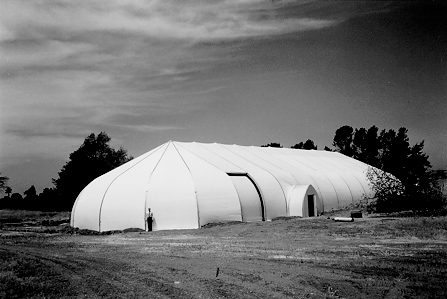
In general, excavating soil contaminated with volatile organic compounds (VOC) results in fugitive air emissions. When using this technology, the area to be excavated is surrounded by a temporary enclosure (see photograph below). Air from the enclosure is vented through an emission control system before being released to the atmosphere. For example, in the case of hydrocarbon and sulfur dioxide emissions, a scrubber and a carbon adsorption unit would be used to treat emissions. As an additional emission control method, a vapor suppressant foam can be applied to the soil before and after excavation.
Excavation Area Enclosure
This technology is suitable for controlling VOC and sulfur dioxide emissions during excavation of contaminated soil.
This technology was demonstrated at the McColl Superfund site in Fullerton, California, in June and July 1990. An enclosure 60 feet wide, 160 feet long, and 26 feet high was erected over an area contaminated with VOCs and sulfur dioxide. A backhoe removed the overburden and excavated underlying waste. Three distinct types of waste were encountered during excavation: oily mud, tar, and hard coal-like char.
The following documents, which contain results from the demonstration, are
available from EPA:
During excavation, the 5-minute average air concentrations within the enclosed area were up to 1,000 parts per million (ppm) for sulfur dioxide and up to 492 ppm for total hydrocarbons (THC). The air pollution control system removed up to 99 percent of the sulfur dioxide and up to 70 percent of the THCs.
The concentrations of air contaminants inside the enclosure were higher than expected. These high concentrations were due in part to the inability of the vapor suppressant foams to form an impermeable membrane over the exposed wastes. The foam reacted with the highly acidic waste, causing the foam to degrade. Furthermore, purge water from foaming activities made surfaces slippery for workers and equipment.
A total of 101 cubic yards of overburden and 137 cubic yards of contaminated waste was excavated. The tar waste was solidified and stabilized by mixing with fly ash, cement, and water in a pug mill. The char wastes did not require further processing.
EPA PROJECT MANAGER:
Jack Hubbard
U.S. EPA
National Risk Management Research Laboratory
26 West Martin Luther King Drive
Cincinnati, OH 45268
513-569-7507
Fax: 513-569-7620