(Fungal Degradation Process)
Polycyclic aromatic hydrocarbons (PAH) are widespread pollutants found at creosote wood treatment sites and at manufacturing gas plants (MGP). Environments contaminated with these compounds are considered hazardous due to the potential carcinogenic effects of specific PAHs.
Environmental BioTechnologies, Inc. (EBT), investigated the bioremediation of contaminants associated with former MGP sites in a program cosponsored by the Electric Power Research Institute and the EPA. Initially, EBT screened over 500 fungal cultures (mostly brown and white rot fungi) for their ability to degrade PAHs and other organic pollutants. A group of 30 cultures were more intensely examined and several cultures were optimized for use in a soil composting process.
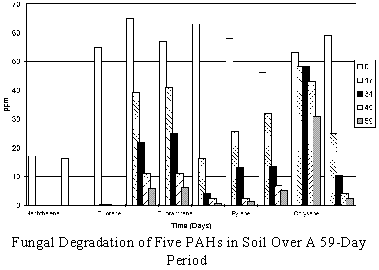
EBT conducted bench-scale treatability studies to assess the feasibility of PAH degradation in soil using a fungal augmented system designed to enhance the natural bioprocess. Results of one study are shown in the figure below. Concentrations of 10 PAHs were determined over a 59-day treatment period.
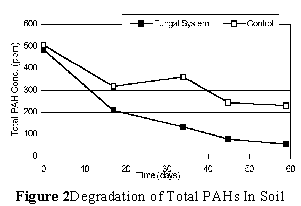
Some states have a soil treatment standard of 100 parts per million for total PAHs. EBT's fungal treatment process was able to reach this cleanup standard within a 5- to 6-week treatment period for one PAH-contaminated soil, as shown in the figure below.
One intended environmental application for this technology is the treatment of soil and sediment contaminated with coal tar wastes from former MGP sites. Soils at these sites are contaminated with PAHs and are difficult to cost-effectively remediate. EBT's fungal soil treatment process is projected to cost $66 to $80 per ton, which is more cost-effective than other technical approaches such as coburning in utility burners, thermal desorption, and incineration that are being considered by utility companies.
EBT was accepted into the SITE Emerging Technology Program in 1993 and began laboratory studies in 1994. The project was completed in 1996. The overall project objectives were to (1) identify fungal and bacterial cultures that efficiently degrade coal tar wastes, and (2) develop and demonstrate a pilot-scale process that can be commercialized for utility industry applications.
EBT initially worked with PAH-spiked water and soils. EBT then tested, under optimized conditions, selected soil cultures from several MGP sites identified by New England Electric Services, a utility company sponsor. Testing identified several possibly superior fungal cultures to degrade PAHs. These cultures exhibited degradative preferences for either lower molecular weight or higher molecular weight PAHs, suggesting a consortia as a possible best approach. These cultures were then examined in nutrient-supplemented systems to determine optimal PAH degradation rates.
A bench-scale composter system was used to determine optimal moisture content, soil amendment requirements, and inoculation procedures for accelerating degradation of PAHs. During the second year, small (less than 1 cubic yard) plots of MGP-site soil were used to test the optimized process in laboratory studies before a field demonstration is conducted. Results from the evaluation will be published by EPA in 1997. Based on its performance during the Emerging Technology Program evaluation, the microbial composting process has been invited to participate in the SITE Demonstration Program.
EBT has also conducted a bench-scale treatability study for a company in France to determine the feasibility of fungal PAH degradation in MGP soil. Results demonstrated an increased rate of biodegradation in the fungal-augmented system for all of the measured individual PAH compounds in the 80-day treatment period, compared with the natural, unamended system.
EBT is also currently conducting a 10-ton soil PAH field project to demonstrate that the fungal degradation process can be scaled up and used in commercial applications.
EPA PROJECT MANAGER:
Ronald Lewis
U.S. EPA
National Risk Management Research Laboratory
26 West Martin Luther King Drive
Cincinnati, OH 45268
513-569-7856
Fax: 513-569-7105
TECHNOLOGY DEVELOPER CONTACT:
Douglas Munnecke
Environmental BioTechnologies, Inc.
969C Industrial Road
San Carlos, CA 94070
415-596-1020
Fax: 415-596-1016
E-mail: ebt@ix.netcom.com