(Biofilm Reactor for Chlorinated Gas Treatment)
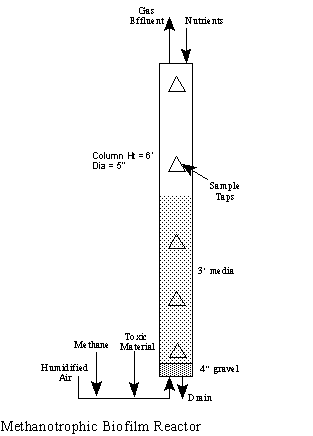
The Remediation Technologies, Inc., biological treatment technology uses aerobic cometabolic organisms in fixed-film biological reactors to treat gases contaminated with volatile chlorinated hydrocarbons. Contaminated gases enter the bottom of the 6-foot-tall reactor column and flow up through a medium that has a high surface area and favorable porosity for gas distribution. Both methanotrophic and phenol-degrading organisms have been evaluated within the reactor. The figure below illustrates a methanotrophic reactor.
In methanotrophic columns, methane and nutrients are added to grow the organisms capable of degrading volatile chlorinated hydrocarbons.
The organisms degrade these compounds into acids and chlorides that can be subsequently degraded to carbon dioxide and chloride. Because of intermediate toxicity and competitive inhibition, methane-volatile organic compound (VOC) feeding strategies are critical to obtain optimum VOC degradation over the long term.
Methanotrophic bacteria from various soils were tested to determine potential VOC compound degradation. The optimal culture from this testing was isolated and transferred to a bench-scale biofilm reactor, where substrate degradation rates per unit of biofilm surface area were determined. Four pilot-scale biofilm reactors were then established, with feeding strategies and retention times based on earlier testing.
The following issues are investigated in the methanotrophic biofilm
reactors:
In addition to studies of the methanotrophic biofilm reactors, a column was seeded with a filamentous phenol-degrading consortia that grows well on phenol in a nitrogen-limited solution. Phenol also induces enzymes capable of rapid cometabolic degradation of TCE.
This technology can treat gaseous streams of volatile chlorinated hydrocarbons. These waste streams may result from air stripping of contaminated groundwater or industrial process streams, or from vacuum extraction during in situ site remediation.
This technology was accepted into the SITE Emerging Technology Program in summer 1992; the evaluation was completed in 1995. The Emerging Technology Report, which details results from the evaluation, is being prepared.
TCE degradation rates in the pilot-scale biofilm reactor were well below those previously measured in laboratory testing or those reported in the literature for pure cultures. The phenol-fed column was started on a celite medium. TCE removal was superior to that in the methanotrophic columns, even with sub-optimal biomass development.
EPA PROJECT MANAGER:
Ronald Lewis
U.S. EPA
National Risk Management Research Laboratory
26 West Martin Luther King Drive
Cincinnati, OH 45268
513-569-7856
Fax: 513-569-7105
TECHNOLOGY DEVELOPER CONTACT:
Hans Stroo
Remediation Technologies, Inc.
1011 S.W. Klickitat Way, Suite 207
Seattle, WA 98134
206-624-9349
Fax: 206-624-2839