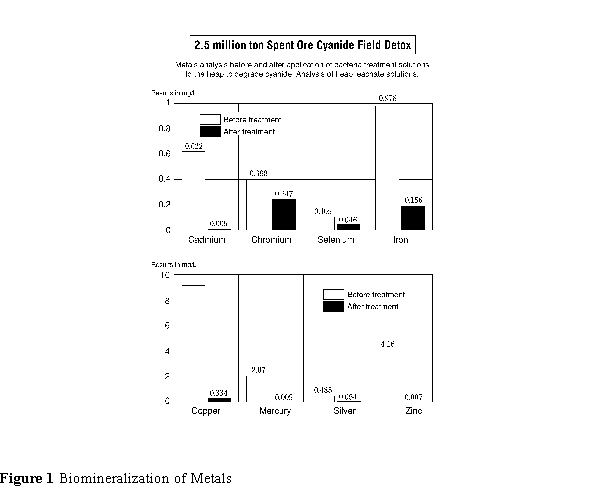
(Biomineralization of Metals)
Pintail Systems, Inc. (PSI), has evaluated the use of bioremediation processes for in situ biomineralization of heavy metals in mine wastes. Biomineralization processes are part of a natural cycle in which minerals are continuously formed, transformed, and degraded. In situ biomineralization capitalizes on the role that microorganisms play in natural ore formation and involves accelerating the biological reactions to remediate waste.
During biomineralization, microorganisms initiate a complex series of reactions. Effective metal removal mechanisms are influenced by biologically catalyzed remineralization reactions. PSI's research indicates that biomineralization begins when microorganisms attach to the ore's surface, forming a "bioslime" layer. Soluble metals then bind to cell walls and extracellular products. Next, metal hydroxides, oxides, and carbonates precipitate into the bioslime layer as amorphous mineral precursors, which provide a template for further mineralization as they stabilize.
A microbial population for biomineralization may be used in either batch or continuous treatment mode for in situ bioremediation. In batch mode, bacteria and nutrient solutions may be applied directly to contaminated soil, sediments, or aqueous solutions to catalyze bioaccumulation and biomineralization. For continuous treatment, microorganisms may be immobilized in a porous matrix or fixed film reactor to remove metals from aqueous solutions.
The PSI biomineralization process is designed to treat solids (soils, sludges, and sediments) that contain heavy metals or organics. It can also be applied to acid rock drainage that occurs naturally or results from mining or energy production operations. The process can be applied at battery waste sites, urban lead sites, mines, and metal production and fabrication sites.
This technology was accepted into the Emerging Technology Program in 1995. Under the Emerging Technology Program, PSI intends to complete development of its biomineralization process, resulting in a field-ready in situ biomineralization technology. PSI will conduct batch and continuous treatment tests at its laboratory and pilot plant in Aurora, Colorado, using soils, ore, sludges, and tailings from several Superfund sites.
PSI has developed and applied full-scale detoxification processes for spent ore at several mines in the western U.S. In addition to cyanide detoxification, metals removal or remineralization has been observed during treatment at these mines. PSI has also demonstrated biomineralization of metals in laboratory- and pilot-scale tests for mining industry clients at mines in Idaho, Nevada, Arizona, California, Colorado, Mexico, and Canada, including the Summitville Mine Superfund site in Colorado. Results from the use of biomineralization is shown in the figure below.
EPA PROJECT MANAGER:
Ronald Lewis
U.S. EPA
National Risk Management Research Laboratory
26 West Martin Luther King Drive
Cincinnati, OH 45268
513-569-7856
Fax: 513-569-7105
TECHNOLOGY DEVELOPER CONTACT:
Leslie Thompson
Pintail Systems, Inc.
11801 E. 33rd Avenue, Suite C
Aurora, CO 80010
303-367-8443
Fax: 303-364-2120