










ITRC's Vapor Intrusion Toolkit Resources – An Orientation
Live Webinar: Tuesday, July 21, 2026, 6:00PM-7:00PM EDT (22:00-23:00 UTC)
Sponsored by: Interstate Technology and Regulatory Council

This orientation will provide a brief overview of vapor intrusion and introduce attendees to the 2026 ITRC Vapor Intrusion (VI) Toolkit and its many resources.
The VI Toolkit includes the Vapor Intrusion Technical and Regulatory Guidance and a suite of fact sheets, technology information sheets, and checklists, all of which are individually available for download and use. Also provided is a series of YouTube Playlists featuring ITRC-produced videos and content from other organizations. Key topic areas addressed in the toolkit include:
- Vapor intrusion fundamentals and conceptual site models
- Site screening and investigation strategies
- Sampling and analysis
- Data evaluation and risk assessment
- Modeling
- Vapor intrusion mitigation
- Community engagement
The Toolkit provides a comprehensive overview of vapor intrusion concepts, recommended practices, and decision-making approaches across a wide range of site conditions. The Toolkit replaces, combines, and updates three previous ITRC vapor intrusion guidance documents: Vapor Intrusion Pathway: A Practical Guidance (VI-1, 2007), Petroleum Vapor Intrusion: Fundamentals of Screening, Investigation, and Management (PVI 1, 2014), and Technical Resources for Vapor Intrusion Mitigation (VIM-1, 2020). It reflects advances in science, policy, and field experience, and is designed to support regulators, practitioners, and stakeholders in conducting consistent and effective vapor intrusion assessments.
The course will provide connections to the 2026 ITRC VI Toolkit to help the audience understand how to find and use these new resources, and upcoming live ITRC training opportunities that will provide more in-depth education concepts provided in the Toolkit.
 Charles Reyes, ITRC
Charles Reyes joined ITRC in May 2023 as the Director and is responsible for overseeing the implementation of the strategic direction and priorities, coordinating activities of the Board of Advisors, Teams, and partners and managing ITRC’s staff and financials. Prior to joining ITRC, he worked for the Association of State and Territorial Solid Waste Management Officials (ASTSWMO) for 14 years in various capacities and spent a few years as an environmental consultant. Charles holds a B.A. in Political Science – Legal Studies from Virginia Tech, and a Master Certificate in Supervisory and Human Resources Management from Michigan State University – Eli Broad College of Business.
 Jennifer Borski, Wisconsin Department of Natural Resources
Jennifer Borski is the Vapor Intrusion Team Leader with the Wisconsin Department of Natural Resources (WDNR). The VI team works to identify and address policy issues, develop and update guidance and provide training regarding the vapor intrusion pathway and state’s Dry Cleaner Environmental Response Program in addition to serving as technical support for vapor intrusion investigations and mitigation systems throughout the state. She also serves as the WDNR’s liaison with the Wisconsin Department of Health Services related to vapor intrusion issues. Since 2019, Jennifer has been a member of ITRC and worked on development of the Vapor Intrusion Mitigation (VIM) and the ITRC Vapor Intrusion Toolkit. Jennifer previously served for 20 years as a Hydrogeologist at WDNR regulating the investigation, mitigation, remediation and redevelopment of contaminated properties in east-central Wisconsin, including discharges from dry cleaners, paper mills, metal plating facilities and other historical industrial and commercial operations. Jennifer is a member of the Assoc. of Vapor Intrusion Professionals (AVIP) and is participating with AARST, also known as the Indoor Environments Assoc., on development of a national vapor intrusion mitigation credential. She has a B.S. from the University of Wisconsin – Eau Claire in Geology and Mathematics.
 Catherine Regan, P.E., Haley & Aldrich
Catherine Regan is a VI Technical Expert at Haley & Aldrich with over 23 years of experience in environmental consulting and engineering. Ms. Regan is a subject matter expert for the assessment and management of residential, commercial and industrial vapor intrusion (VI) investigation and mitigation both in the US and abroad. Additionally, she has experience in other areas of contaminated site management including site investigations; stakeholder engagement; data visualization and interpretation; and remediation system design, permitting, construction, operations, and maintenance. Since 2012, Catherine has been an active member and trainer of ITRC Petroleum Vapor Intrusion, Vapor Intrusion Mitigation, and Vapor Intrusion Toolkit teams. Ms. Regan received a BS in Environmental Engineering from Cornell University and an MS in Environmental Fluid Mechanics and Hydrology from Stanford University. She is a registered Professional Engineer in Massachusetts, Vermont, and Connecticut.
Moderator:
ITRC Training Program (itrc@itrcweb.org)
- These materials will be available by Tuesday, July 21, 2026
Webinar Slides and References:
- These materials will be available by Tuesday, July 21, 2026
Additional Resources:
- These materials will be available by Tuesday, July 21, 2026
The feedback form for this webinar will be available starting on Tuesday, July 21, 2026.
Help & FAQs
- Frequently Asked Questions
- Content Questions?
Call ITRC Training Program at 202-266-4932 or itrc@itrcweb.org - Technical Problems?
Leave us a comment - Cancel Your Registration
- My Participation Records
- CEU Credits and PDHs
Zoom Resources
Before Webinar Day
This seminar will be delivered through Zoom. Participants are encouraged to update to the latest version of the Zoom application for the best experience.
If you are unable to install the Zoom application, most functions will be available if you join just using a modern web browser such as Chrome, Edge or Firefox. We strongly encourage you to run the Zoom Meeting Test prior to attending this webinar. Technical support on the day of the webinar will be very limited and subject to significant delays.
Backup Conference Call
If you cannot participate using online audio, you may join the optional call in line. After checking in for the live event using the instructions listed below, you will see several options to participate. Please click the links in option 4 to follow along by phone and obtain the call in number. If you cannot access the phone number, you may request the call in line from the event moderator in the Q&A or send an email to clu-in@epa.gov
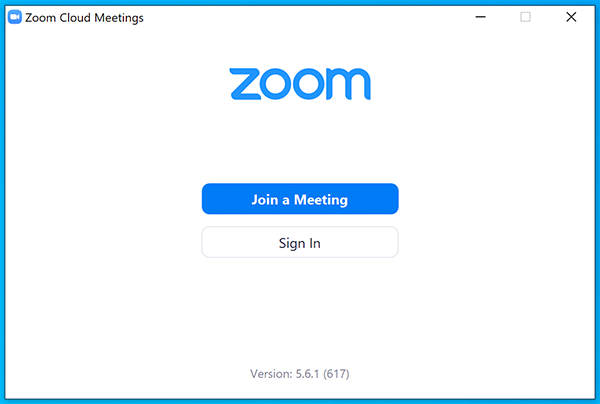
Click on "Join Webinar" at the top of this screen, enter your exact first and last name as you registered and enter the number of people attending at your location (including yourself). You should then be taken to the Zoom meeting room. Join with Zoom Application: For those joining with the Zoom application, you may be prompted to sign with a zoom account or join as a guest without signing in.
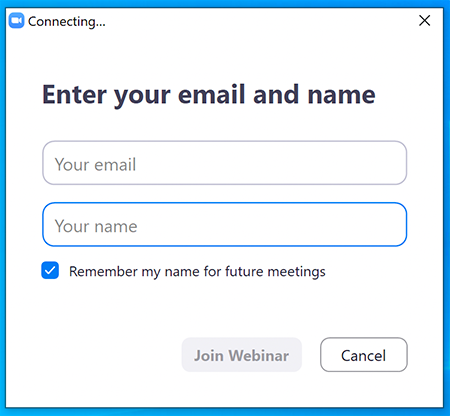
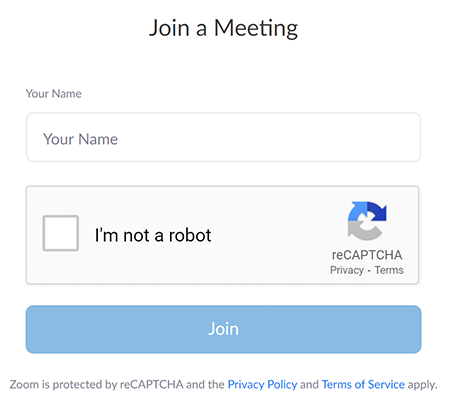
If joining as a guest, you will be prompted to enter your name and email address. Remember your name, image, video or voice may be visible to others in the live event. When done, click "Join" When it is time for the live event to start, the meeting host will admit you to the live Zoom meeting. Join via web browser (without the Zoom Application): For those joining with a web browser, you may close any pop ups prompting you to download the Zoom app. The next window will allow you to enter your name (first name and last name) and check the box that you are not a robot. Click the blue join button. You may also be asked to provide your email address before joining the room. Remember your name, image, video or voice may be visible to others in the live event. When done, click "Join" When it is time for the live event to start, the meeting host will admit you to the live Zoom meeting. You may need to periodically refresh the browser window to confirm if the host has admitted you. The presenters will control what slide you are viewing. You may submit questions online for the instructors to answer during the webinar by typing in the "Q&A" area. It is not necessary to wait until the question and answer periods to submit questions. At the end of the webinar you will be guided to our feedback form and links to additional resources, including the complete presentation. These links will remain active after the webinar. Provided for your convenience. Importing or accepting the invitation within this iCalendar file is not required, and declining the invitation does not cancel your registration. For additional information on iCalendar, please see our
iCalendar Help It is EPA's policy to make reasonable accommodation to persons with disabilities wishing to participate in the agency's programs and activities, pursuant to the Rehabilitation Act of 1973, 29 U.S.C. 791. Any request for accommodation should be made to ITRC Training Program at 202-266-4932 or itrc@itrcweb.org, preferably one week or more in advance of the seminar, so that EPA will have sufficient time to process the request. EPA would welcome specific recommendations from requestors specifying the nature or type of accommodation needed. EPA welcomes specific recommendations from requestors specifying the nature or type of accommodation needed. Please note that CLU-IN provides both alternate phone call-in options and closed captioning for all webinars, and requests for these specific accommodations are not necessary.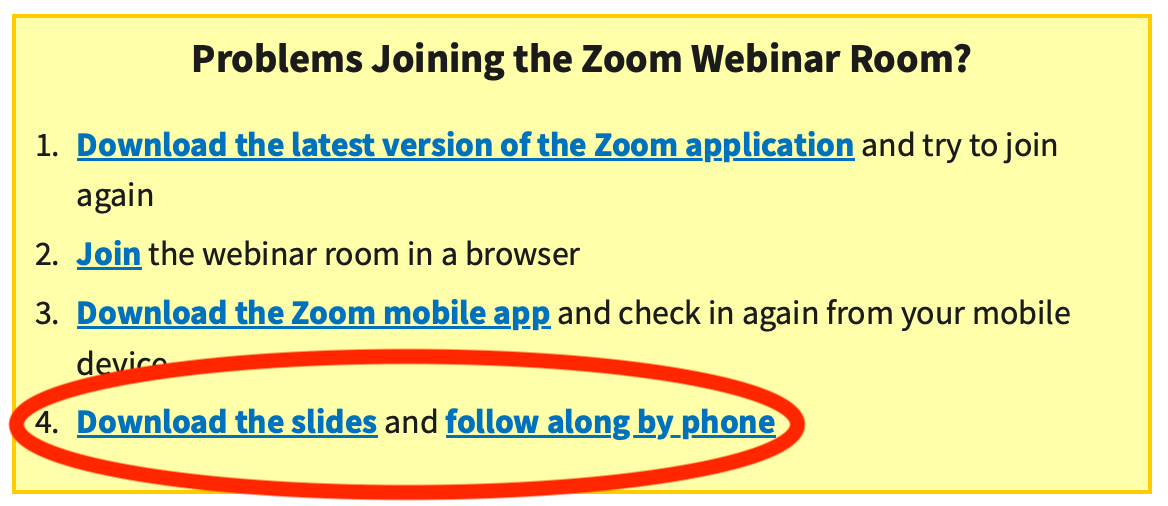
Webinar Day, Checking In
Moving Through Slides
Feedback & Links to Additional Resources
iCalendar File
Rehabilitation Act Notice for Reasonable Accommodation
Rehabilitation Act Notice for Reasonable Accommodation
It is EPA's policy to make reasonable accommodation to persons with disabilities wishing to participate in the agency's programs and activities, pursuant to the Rehabilitation Act of 1973, 29 U.S.C. 791. Any request for accommodation should be made to ITRC Training Program at 202-266-4932 or itrc@itrcweb.org, preferably one week or more in advance of the webinar, so that EPA will have sufficient time to process the request. EPA would welcome specific recommendations from requestors specifying the nature or type of accommodation needed. EPA welcomes specific recommendations from requestors specifying the nature or type of accommodation needed. Please note that CLU-IN provides both alternate phone call-in options and closed captioning for all webinars, and requests for these specific accommodations are not necessary.
Webinar Recording
By participating in this CLU-IN webinar, you automatically agree to authorize recording of audio and visual content presented during this live event and consent to subsequent use of this recording in the public domain by the U.S. Environmental Protection Agency. This recording may include questions, comments and poll responses provided by you during the live event in addition to your name, voice, image or likeness. This recording will be made available after the conclusion of the live event as part of the CLU-IN webinar archives, and will remain available indefinitely. If you do not wish to consent to the recording, please do not join the live event, and contact clu-in@epa.gov to discuss your concerns.
Content Disclaimer
This webinar is intended solely to provide information to the public. The views and opinions expressed as part of this webinar do not necessarily state or reflect those of the U.S. Environmental Protection Agency. It is not intended, nor can it be relied upon, to create any rights enforceable by any party in litigation with the United States, or to endorse the use of products or services provided by specific vendors. With respect to this webinar, neither the United States Government nor any of their employees, makes any warranty, express or implied, including the warranties of merchantability and fitness for a particular purpose, or assumes any legal liability or responsibility for the accuracy, completeness, or usefulness of any information, apparatus, product, or process disclosed, or represents that its use would not infringe privately owned rights.