










Understanding Vapor Intrusion -Introductory Concepts & Fundamentals - A Two Part Series
Live Webinars:
Tuesday, September 8, 2026, 1:00PM-3:00PM EDT (17:00-19:00 UTC)
Tuesday, September 22, 2026, 1:00PM-3:00PM EDT (17:00-19:00 UTC)
Sponsored by: Interstate Technology and Regulatory Council

The Vapor Intrusion 101 training series provides an overview of vapor intrusion (VI) and presents information from the 2026 ITRC VI Toolkit (which includes fact sheets, technology information sheets, and checklists).
This course introduces participants to the fundamentals of vapor intrusion, the process by which vapor-forming chemicals in contaminated soil or groundwater volatilize and migrate into buildings. The course will discuss sources, pathways, and receptors. It will identify and assess VI risks in various settings (residential, commercial, industrial) and familiarize participants with regulatory frameworks and guidelines (e.g., USEPA, state-specific regulations). The participants will gain working knowledge of how to develop a Conceptual Site Model (CSM), design and implement sampling strategies, establish data quality objectives (DQOs), and conduct data and risk evaluations. It will provide an overview of mitigation strategies, including various closure strategies, land use covenants, and institutional controls.
Session 1 will focus on:
- What is Vapor Intrusion
- VI Exposure Pathway
- VI in Practice - including common CSMs, Scenarios, and Chemicals
- Potential Limiting Factors for VI - PVI vs Chlorinated VI, Geology, Hydrogeology, and Building Operating Conditions
- How is VI Different & Challenges in Evaluating VI
Session 2 will focus on:
- How VI is Different
- How to assess VI - CSM, Sample Collection, Data Interpretation, Risk Assessment, and Project Life Cycle
- Managing VI Risk at a Site - Mitigation, Remediation, Monitoring
- What does Closure look like & Various Exit Strategies
The course will provide connections to the 2026 ITRC VI Toolkit to help the audience understand how to find and use these new resources for VI sites.
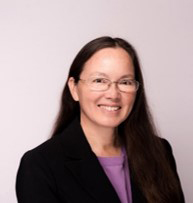 Lila Beckley, GSI Environmental, Inc.
Lila Beckley is a Senior Geologist at GSI Environmental, Inc., in Austin, Texas, with more than 25 years of experience in the environmental field. Since joining GSI in 2007, she has been involved with numerous environmental assessments, litigation support, and other projects. Vapor intrusion is one of her focus areas. She has conducted VI research, investigation, and mitigation programs at sites around the U.S.; developed investigation protocols, guidance, and training; and authored peer-reviewed journal articles. Prior to joining GSI, Lila worked in remediation programs at the Texas Commission on Environmental Quality, in various roles ranging from project to program management.
 Jennifer Borski, Wisconsin Department of Natural Resources
Jennifer Borski is the Vapor Intrusion Team Leader with the Wisconsin Department of Natural Resources (WDNR). The VI team works to identify and address policy issues, develop and update guidance and provide training regarding the vapor intrusion pathway and state’s Dry Cleaner Environmental Response Program in addition to serving as technical support for vapor intrusion investigations and mitigation systems throughout the state. She also serves as the WDNR’s liaison with the Wisconsin Department of Health Services related to vapor intrusion issues. Since 2019, Jennifer has been a member of ITRC and worked on development of the Vapor Intrusion Mitigation (VIM) and the ITRC Vapor Intrusion Toolkit. Jennifer previously served for 20 years as a Hydrogeologist at WDNR regulating the investigation, mitigation, remediation and redevelopment of contaminated properties in east-central Wisconsin, including discharges from dry cleaners, paper mills, metal plating facilities and other historical industrial and commercial operations. Jennifer is a member of the Assoc. of Vapor Intrusion Professionals (AVIP) and is participating with AARST, also known as the Indoor Environments Assoc., on development of a national vapor intrusion mitigation credential. She has a B.S. from the University of Wisconsin – Eau Claire in Geology and Mathematics.
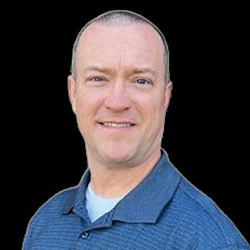 Ryan Jones, Brown and Caldwell
Ryan Jones is an Environmental Toxicologist at Brown and Caldwell with over 20 years of experience in environmental research and consulting. Mr. Jones is a vapor intrusion and human health risk assessment subject matter expert, having supported development of multiple vapor intrusion and risk assessment guidance documents. He has extensive experience with litigation support; stakeholder engagement; environmental assessments, site characterization and remediation; and data visualization and interpretation. He is an active member in ITRC and the Assoc. of Vapor Intrusion Professionals (AVIP). Ryan earned a bachelor's degree in wildlife and fisheries biology and a master’s degree in environmental toxicology from Clemson University.
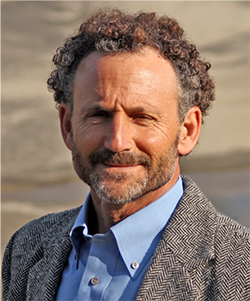 Mark Kram, Ph.D, Groundswell Technologies, LLC
Dr. Mark Kram is the Founder and CTO for Groundswell Technologies, LLC, a group specializing in automated Cloud based monitoring and modeling of environmental sensor and analytical instrumentation networks. Dr. Kram earned his Ph.D. in Environmental Science and Management from the University of California at Santa Barbara, an M.S. degree in Geology from San Diego State University, and his B.S. degree in Chemistry from the University of California at Santa Barbara. He has over 40 years of experience using innovative environmental assessment techniques, has authored articles, national standards and book chapters on the subject, and has taught graduate level courses on related topics. Dr. Kram is an internationally recognized expert in site characterization and remediation and has been instrumental in the areas of sensor development and implementation, innovative GIS applications, DNAPL site characterization, chemical field screening, well design, direct push well acceptance, mass flux/discharge based remediation performance, vapor intrusion, and groundwater basin yield and storage change assessment. Dr. Kram has been featured in Forbes, is an active member of the National Ground Water Association (NGWA), American Society of Testing and Materials (ASTM Subcommittees D18.21 and E50.02; Chair of D18.21 on Groundwater and Vadose Zone Investigations), and the Interstate Technology & Regulatory Council (ITRC).
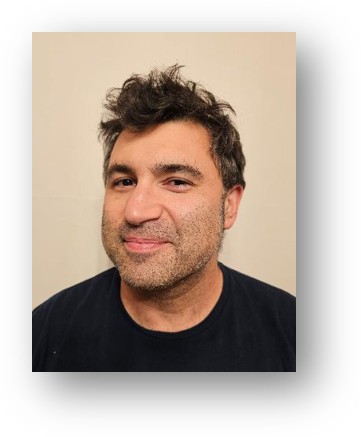 Andrew Leavitt, CA Department of Toxic Substances Control
Andrew Leavitt, P.G. is a Professional Geologist with 20 years of experience in environmental site characterization and remediation as both a consultant (including Arcadis U.S. Inc. and Parsons) and a state regulator at the California Environmental Protection Agency Department of Toxic Substances Control. A graduate of Occidental College, Mr. Leavitt has worked on characterizing media plumes (i.e., soil, soil vapor, and groundwater), evaluating vapor intrusion, and operating and maintaining remediation and mitigation systems for numerous petroleum hydrocarbon and chlorinated solvent-contaminated sites. Mr. Leavitt is an active member of CalEPA’s Vapor Intrusion Workgroup, DTSC’s Vapor Intrusion Team, ITRC’s Vapor Intrusion Guidance team, and has been involved in training DTSC staff on managing vapor intrusion projects.
 Emma Luo, Ph.D., Chevron
Dr. Emma Luo has 20 years of experience in vapor intrusion research, site investigation, and mitigation. Since 2012, she has been working as a subject matter expert (SME) on vapor intrusion for Chevron. She has worked on more than 500 PVI and CVI sites. Before joining Chevron, she was a key researcher in three of the four well-known large-scale vapor intrusion field research studies (2 PVI and 1 CVI) in the US, when she was studying with, and working in, Dr. Paul Johnson’s research lab at Arizona State University. She has authored and co-authored more than 40 peer-reviewed journal articles and conference presentations.
 Diana Marquez, Emeritus
Diana Marquez retired as an Associate Toxicologist with Burns & McDonnell, where she started in June 1995. She served as the company's National Practice Leader for Risk Assessment Services. She has more than twenty years of risk assessment experience and has worked with a wide variety of sites under CERCLA, RCRA, and state-led programs. She has successfully completed work nationwide for both human health risk assessments and the determination of site-specific cleanup levels. She has direct experience working with large PRP groups on complex sites that require careful negotiations with regulators. Through this experience, she has gained in-depth knowledge of state and federal regulations. She authored 15+ publications on risk assessment, risk-based corrective actions, and vapor intrusion. Diana earned a bachelor's degree in biology from Villanova University in Villanova, PA in 1991 and a master's degree in toxicology from University of New Mexico in 1992.
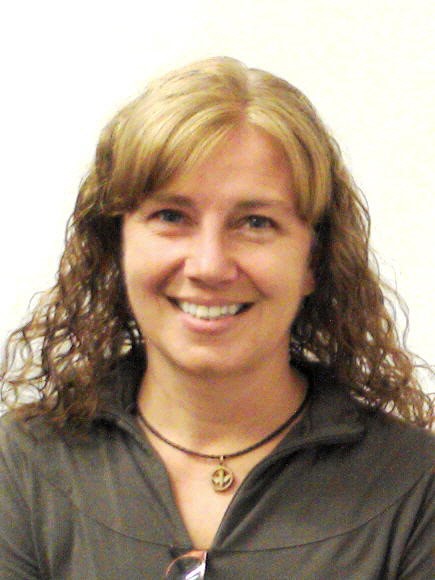 Susan McKinley, P.E., Indiana Department of Environmental Management (smckinle@idem.in.gov)
Susan has over nineteen years of experience at the Indiana Department of Environmental Management (IDEM). She worked more than ten years as an Environmental Engineer in IDEM’s office of Land Quality before moving to the Risk Assessment group for five years and eventually transitioning to lead the Science Services Branch in late 2021. Susan has been a member of IDEM’s Technology Evaluation Workgroup, IDEM R2 Closure Guidance Workgroup, IDEM PFAS workgroup and the Vapor Intrusion Workgroup. Susan has a Bachelors degree in Chemistry along with a Masters in Civil/ Environmental Engineering from Purdue University.
 Catherine Regan, P.E., Haley & Aldrich
Catherine Regan is a VI Technical Expert at Haley & Aldrich with over 23 years of experience in environmental consulting and engineering. Ms. Regan is a subject matter expert for the assessment and management of residential, commercial and industrial vapor intrusion (VI) investigation and mitigation both in the US and abroad. Additionally, she has experience in other areas of contaminated site management including site investigations; stakeholder engagement; data visualization and interpretation; and remediation system design, permitting, construction, operations, and maintenance. Since 2012, Catherine has been an active member and trainer of ITRC Petroleum Vapor Intrusion, Vapor Intrusion Mitigation, and Vapor Intrusion Toolkit teams. Ms. Regan received a BS in Environmental Engineering from Cornell University and an MS in Environmental Fluid Mechanics and Hydrology from Stanford University. She is a registered Professional Engineer in Massachusetts, Vermont, and Connecticut.
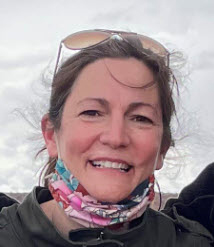 Laura Trozzolo, TRC Companies
Laura Trozzolo leads TRC's Risk-Based Modeling / Risk Assessment Practice for TRC. In this role, Laura provides technical and regulatory oversight for a multitude of TRC projects and leads the company's Risk Assessment Center of Research and Expertise (CORE) team, while supporting professional development of TRC's risk assessment staff. Laura has been with TRC for 10 years as a senior risk assessor in TRC's Fort Collins, Colorado office. She has 29 years of experience in human health risk assessment and risk management services for a multitude of sites, including US military installments, active/former refineries, and rail yards. She also serves as a technical specialist on fate and transport issues for TRC, including vapor intrusion, soil migration to groundwater, and groundwater lateral transport pathways, in addition to human health risk assessment services, including project/data management, and regulatory compliance for emerging contaminants, including PFAS.
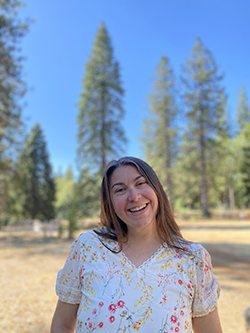 Tina Ures, California State Water Resources Control Board
Tina Ures is a Geologist with the California State Water Resources Control Board, Division of Water Quality. She has worked in the environmental field for over 10 years now overseeing assessment and remediation activities on variety of sites impacted with chlorinated solvents and other contaminants throughout California. Tina currently assists with managing statewide cleanup programs for the Water Boards, VI technical expert for cleanup programs, team member of the California Environmental Protection Agency VI Workgroup, and co-lead in developing a statewide database to evaluate vapor attenuation. Additionally, she served as a team leader for ITRC's Vapor Intrusion Toolkit. Tina is also an Openscapes Champion and Instructor for the Water Boards Openscapes Champion Cohorts.
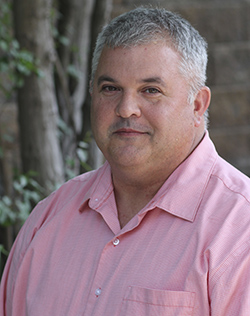 Matthew Williams, Michigan Department of Environment, Great Lakes, and Energy's (EGLE)
Matt Williams is the Vapor Intrusion Specialist for the development and implementation of methods used to investigate and assess vapor intrusion issues for the Remediation and Redevelopment Division of the Michigan Department of Environment, Great Lakes, and Energy's (EGLE). He drafted several guidance documents and standard operating procedures and has conducted numerous trainings on soil gas methods and vapor intrusion for stakeholder groups and consultants. Matt earned a Bachelor of Science degree in Geology from Central Michigan University in 1993.
Moderator:
ITRC Training Program (itrc@itrcweb.org)
- These materials will be available by Tuesday, September 8, 2026
Webinar Slides and References:
- These materials will be available by Tuesday, September 8, 2026
Additional Resources:
Thank you for participating in our webinar. We would like to receive any feedback you might have that would make this service more valuable.
Help & FAQs
- Frequently Asked Questions
- Content Questions?
Call ITRC Training Program at 202-266-4932 or itrc@itrcweb.org - Technical Problems?
Leave us a comment - Cancel Your Registration
- My Participation Records
- CEU Credits and PDHs
Zoom Resources
Before Webinar Day
This seminar will be delivered through Zoom. Participants are encouraged to update to the latest version of the Zoom application for the best experience.
If you are unable to install the Zoom application, most functions will be available if you join just using a modern web browser such as Chrome, Edge or Firefox. We strongly encourage you to run the Zoom Meeting Test prior to attending this webinar. Technical support on the day of the webinar will be very limited and subject to significant delays.
Backup Conference Call
If you cannot participate using online audio, you may join the optional call in line. After checking in for the live event using the instructions listed below, you will see several options to participate. Please click the links in option 4 to follow along by phone and obtain the call in number. If you cannot access the phone number, you may request the call in line from the event moderator in the Q&A or send an email to clu-in@epa.gov
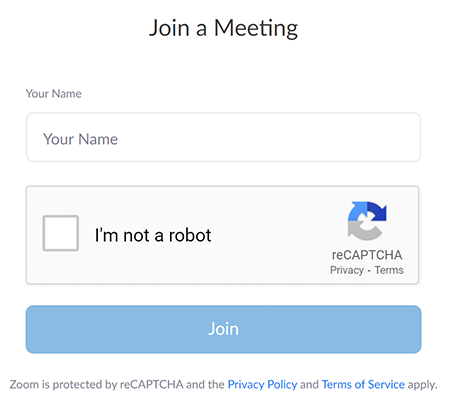
Click on "Join Webinar" at the top of this screen, enter your exact first and last name as you registered and enter the number of people attending at your location (including yourself). You should then be taken to the Zoom meeting room. Join with Zoom Application: For those joining with the Zoom application, you may be prompted to sign with a zoom account or join as a guest without signing in.
If joining as a guest, you will be prompted to enter your name and email address. Remember your name, image, video or voice may be visible to others in the live event. When done, click "Join" When it is time for the live event to start, the meeting host will admit you to the live Zoom meeting. Join via web browser (without the Zoom Application): For those joining with a web browser, you may close any pop ups prompting you to download the Zoom app. The next window will allow you to enter your name (first name and last name) and check the box that you are not a robot. Click the blue join button. You may also be asked to provide your email address before joining the room. Remember your name, image, video or voice may be visible to others in the live event. When done, click "Join" When it is time for the live event to start, the meeting host will admit you to the live Zoom meeting. You may need to periodically refresh the browser window to confirm if the host has admitted you. The presenters will control what slide you are viewing. You may submit questions online for the instructors to answer during the webinar by typing in the "Q&A" area. It is not necessary to wait until the question and answer periods to submit questions. At the end of the webinar you will be guided to our feedback form and links to additional resources, including the complete presentation. These links will remain active after the webinar. Provided for your convenience. Importing or accepting the invitation within this iCalendar file is not required, and declining the invitation does not cancel your registration. For additional information on iCalendar, please see our
iCalendar Help It is EPA's policy to make reasonable accommodation to persons with disabilities wishing to participate in the agency's programs and activities, pursuant to the Rehabilitation Act of 1973, 29 U.S.C. 791. Any request for accommodation should be made to ITRC Training Program at 202-266-4932 or itrc@itrcweb.org, preferably one week or more in advance of the seminar, so that EPA will have sufficient time to process the request. EPA would welcome specific recommendations from requestors specifying the nature or type of accommodation needed. EPA welcomes specific recommendations from requestors specifying the nature or type of accommodation needed. Please note that CLU-IN provides both alternate phone call-in options and closed captioning for all webinars, and requests for these specific accommodations are not necessary.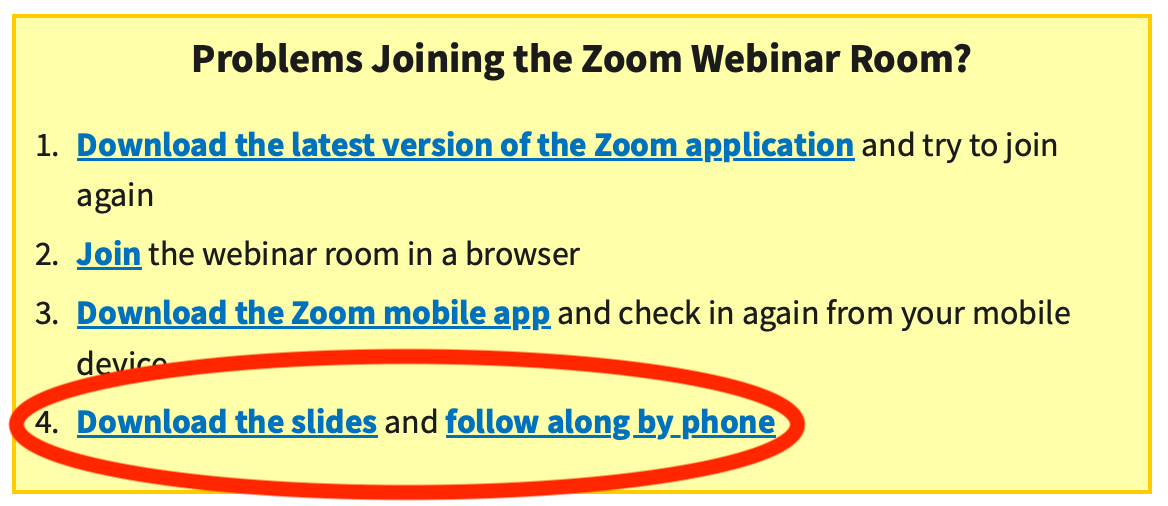
Webinar Day, Checking In


Moving Through Slides
Feedback & Links to Additional Resources
iCalendar File
Rehabilitation Act Notice for Reasonable Accommodation
Rehabilitation Act Notice for Reasonable Accommodation
It is EPA's policy to make reasonable accommodation to persons with disabilities wishing to participate in the agency's programs and activities, pursuant to the Rehabilitation Act of 1973, 29 U.S.C. 791. Any request for accommodation should be made to ITRC Training Program at 202-266-4932 or itrc@itrcweb.org, preferably one week or more in advance of the webinar, so that EPA will have sufficient time to process the request. EPA would welcome specific recommendations from requestors specifying the nature or type of accommodation needed. EPA welcomes specific recommendations from requestors specifying the nature or type of accommodation needed. Please note that CLU-IN provides both alternate phone call-in options and closed captioning for all webinars, and requests for these specific accommodations are not necessary.
Webinar Recording
By participating in this CLU-IN webinar, you automatically agree to authorize recording of audio and visual content presented during this live event and consent to subsequent use of this recording in the public domain by the U.S. Environmental Protection Agency. This recording may include questions, comments and poll responses provided by you during the live event in addition to your name, voice, image or likeness. This recording will be made available after the conclusion of the live event as part of the CLU-IN webinar archives, and will remain available indefinitely. If you do not wish to consent to the recording, please do not join the live event, and contact clu-in@epa.gov to discuss your concerns.
Content Disclaimer
This webinar is intended solely to provide information to the public. The views and opinions expressed as part of this webinar do not necessarily state or reflect those of the U.S. Environmental Protection Agency. It is not intended, nor can it be relied upon, to create any rights enforceable by any party in litigation with the United States, or to endorse the use of products or services provided by specific vendors. With respect to this webinar, neither the United States Government nor any of their employees, makes any warranty, express or implied, including the warranties of merchantability and fitness for a particular purpose, or assumes any legal liability or responsibility for the accuracy, completeness, or usefulness of any information, apparatus, product, or process disclosed, or represents that its use would not infringe privately owned rights.